The stories in this folder are written in a certain style, that of a participant reminiscing about an event long past. It is a style that I have been unable to summon at a whim. Rather, on rare occasions, an example comes to me unbidden. Only three times has this happened, and all of those stories will eventually reside in this folder. I hope you enjoy the reading as much as I did the writing!
Wrong Turn
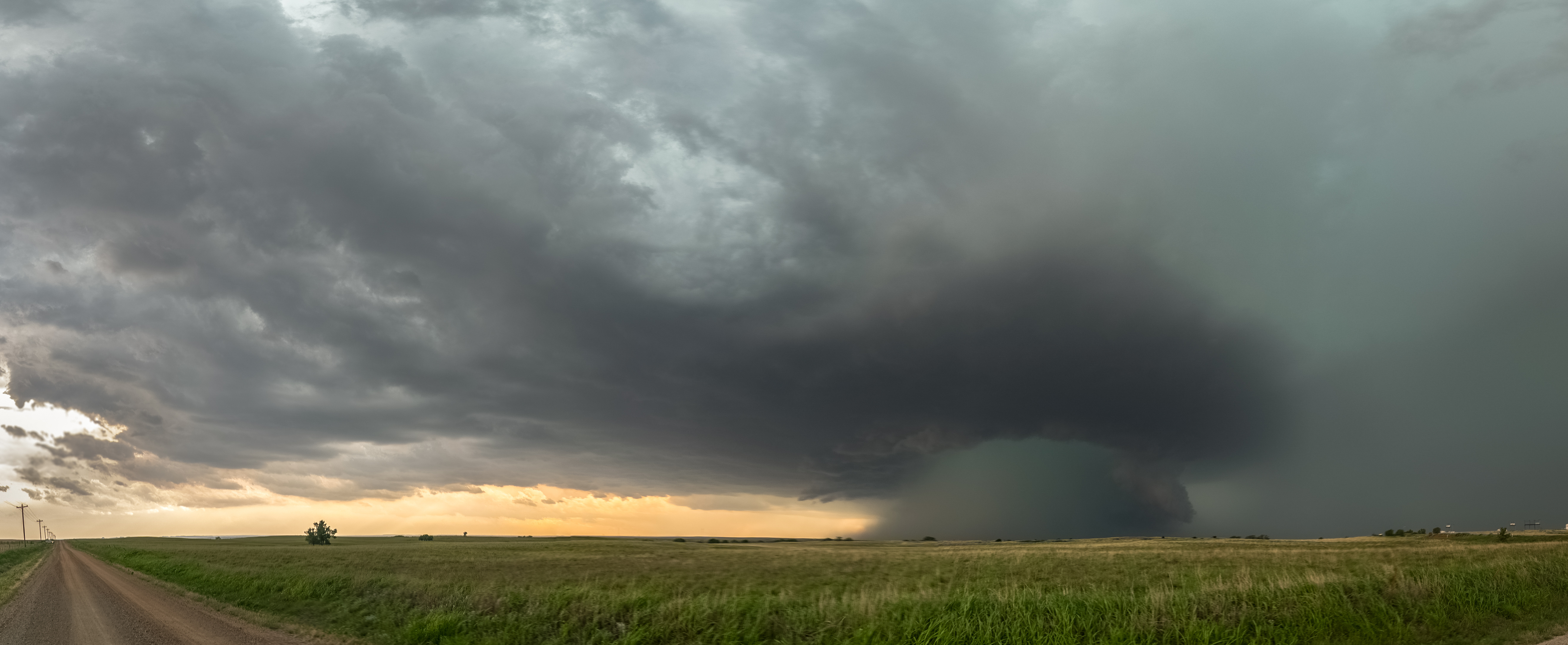 “Hospitals?” Renato shouted. “I hate hospitals! Don’t even get me started.”
“You hate everything,” his older partner countered, taking a pull of the beer I’d bought them.
“And not without good reason,” the young Latino declared. “The best place to be if you’re gonna spend time in a hospital is in a coma.”
I’m sorry. My name is Eric Zullo. Yeah, don’t ask. I was a journalism student at the University of Texas, and my assignment was to interview some of the lunatics that chase tornadoes up and down the alley every spring. Mind you, serious scientists were one thing, but I was looking for the freelancers, the colorful characters akin to modern day Vandals, looking to “loot” a big storm for that once-in-a-lifetime video or sound recording that would bring them fame and fortune. The meteorology students I talked to told me that that particular chimera didn’t exist, and even if it did, the professionals with their high-tech gear and equipment were the only ones who had a chance to capture it. That didn’t mean they weren’t out there trying.
I had found them eventually, holed up in a honky-tonk along a deserted stretch of two-lane highway between Jasper and Marshall. Tipped off by their dinged-up vehicles drawn up together in the lot outside, I had entered to find a half-dozen of them around two of the tables to the side of the bar. They had two radios going, one tuned to the National Weather Service, the other to a commercial station in Shreveport. I bought them a round, introduced myself, and Renato and Homer invited me to join them at their table. I ordered a burger and fries and sat down to listen. They weren’t shy about talking.
“Not the waiting room?” Homer asked.
“Worst place you can be!” Renato asserted. “They want you to die in there. Sterile, like a sci-fi torture chamber. They start trying to depress you to death before you get to the check-in desk. And when you’re in the waiting room with nothing but old magazines to look at, what are you waiting for?”
“I give up,” Homer replied.
Renato turned his intense gaze on me.
“You’re waiting for somebody with a God complex to come out and tell you that someone you care about has died, that’s what. Better to be unconscious for the whole time you’re there.”
“That’s a sorry way to look at things,” Homer declared.
“Yeah?” Renato shot back. “You remember that girl we had with us a couple of seasons back?”
“Who, Pauline?”
“No, no, she was the radar operator. No, I’m talking about that photographer, the pretty one. Mel, we called her.”
“Oh, right, Mel. That was what, five, six seasons ago.”
“Don’t see what difference that makes.”
“Mel… What was her name, Melissa?”
“Melanie. Melanie Cooper,” Renato corrected, looking distractedly toward the grease-stained window.
“Yeah, that’s right. Well, Mel was a looker. Face of an angel, body of a devil if you get my drift.”
“Too bad she was a lesbian,” Renato added.
“She wasn’t a lesbian, Rainy, she just wouldn’t sleep with you.”
“Same thing.”
“Whatever. Everybody on the crew and everyplace we went wanted to get into her pants, but that’s another story. She was a freelance photographer who sort of attached herself to the crew. None of us much minded. We’re all away from home for a few months at a stretch, and she was a nice piece of eye candy, but that’s not the story. She was after that holy grail of pictures, and she got some good ones, make no mistake.”
“The girl was nuts,” Renato allowed.
“The girl had bigger balls than most of you guys,” Homer said. “She drove an old Dodge pickup. It was full of dings, and the back window was cracked, all from being hit by flying debris. You need to understand, when you’re chasing an F4, if you’re gonna get close enough to do anything meaningful, junk’s in the air and you’re gonna get hit. You allow for it. Window cages, plywood armor, whatever you think will make your truck a little more survivable. Well, Mel didn’t think that was close enough. She liked to take her pictures from close enough to shake hands with it. She’d rather dance with a funnel than a handsome man, and that’s what finally brought her down.”
“Tell me about it,” I said, leaning forward. I was about three-quarters convinced he was going to tell me one of those harrowing life-and-death stories that always end with, “What do you think happened? I died?”
“We were up in Arkansas around Fort Chaffee and we stopped into a roadside diner to lubricate the pipes, you know, and there were some army guys from the post there. Mel got into a conversation with one of ‘em, they put on a show on the dance floor, and I gather he asked her to come to a party that some of his buddies were throwing. He wrote something on a napkin and gave it to her. I assume it was an address, and he rolled out. She hung around to finish the sandwich she’d ordered, and made ready to follow him.”
“He was probably gonna rape her,” Renato grumbled.
“And she’d still be alive, wouldn’t she? She’d laid a fiver on the table, put on her coat, and just cleared the door when word came over the radio that an F4 was building right up the road. You don’t get many opportunities like that. Most of the time, you hear about a big one, and it’s on the other side of the state, or some river you can’t cross, or something, you know? So we pay up and head for our trucks, and as we’re starting to roll, Mel’s truck comes down the parking aisle and sets up at the exit with the left turn signal on. We came up behind her, and I called her on the CB. Told her the queen mother of all storms was forming up just up the road, and did she want to come. Her right signal came on, she turned out ahead of us, and led the way up the highway.
“Well, I didn’t have to give her any more directions. This thing dropped not much more than a mile ahead of us. The base must have been a quarter-mile across. It crossed the highway up ahead of us, and we started maneuvering to get behind it. That’s the only reasonably safe approach, that, or from the right side of its path if you can’t get behind it.”
“Why’s that?”
“If it turns, it’s most likely to go in the direction of rotation, and that’s counterclockwise, so, to the left. Well, as we passed a little farm road that went off to the left, Mel turned onto it. I knew right away that wasn’t good, and I radioed to ask what she was doing, but she didn’t answer. Both hands on the wheel and eyes on the cloud, no doubt. So I admonished her to be careful, and me and Rainy went about our business, got our pictures, took our readings, and all that. National Weather said our instrument readings were very useful, though they never told us how, and I sold a series of pictures to the AP that let us buy some new equipment.”
“And Mel?”
“Yeah, Mel. After the dust settled, we couldn’t raise her on the radio, so we went down that farm road. We eventually spotted her truck upside-down a quarter mile out into the field. We had to walk out there. Even our four-by would barely manage the road itself, never mind that saturated field. We found her hanging upside-down. Her seat belts had held.”
“For all the good that did her.”
“Yeah. Well, we cut her down and took her to Fort Smith General. It was standing room only, as you might imagine after a storm like that, and a hundred ambulances must have pulled in after we got there. They took her in for prep, and we were in that waiting room for about six hours before they came out to tell us that she didn’t make it. She had a depression in her skull that caused her brain to swell, and that’s what killed her. They said it wouldn’t have mattered if we’d had a helicopter standing by, the damage was done before we got her out of the truck. And that’s why my young friend hates hospitals. Plus, I’ve never been able to shake the feeling that I killed her.”
“You never told me that,” Renato said.
“Why?” I asked him. “You didn’t tell her to go down that road. In fact, you just said you told her not to.”
“That was pure Mel,” Homer replied. “We all knew she’d take any chance no matter how crazy. Going down that road was a wrong turn, and all of us knew it, but that was just the second wrong turn. The first was when she fell in with us. If I’d just kept my mouth shut, she would have turned left and gone to her rendezvous with her soldier and whatever that would have led to, but I didn’t. I told her about the storm of the century right up the road, and she turned right instead. She died because I couldn’t leave it be.”
“It was what she wanted. She could have gone left anyway.”
“No, she couldn’t, and I knew it. And I told her about it anyway.”
Homer ordered another round for the crew as the mood at our table at least turned somber for a while. I heard a few more stories, then a call came out about an F3 forming just across the border in Louisiana, and everybody manned their vehicles like an air force crew scrambling for an intercept.
I spent a few more days with these guys collecting stories and photos, but when I got back to San Antonio, the one I chose for the paper was the story of Melanie Cooper, how she died, and the effect she’d had on this crew of roughneck storm chasers that spent their free time doing a thing that I never quite came to understand. Mrs. Lowe gave me a C+ and printed the story in the back pages of the student union paper, a grade for which I never forgave her, given what went into it. I was somewhat vindicated when the San Antonio Times picked it up and it won a minor award from the South Texas Journalists’ Society, and it turned out all right in the end. I have a wife and two little tornadoes of my own now, and a job in the business that supports us all comfortably, but I’ve never forgotten the Blacksky Stormhunters, and a thunderstorm never closes in that I don’t think about Mel, and wonder what drove her to give her life in pursuit of that one great photo.
My wife doesn’t get it, and I’m not sure that I do. Maybe someday the grand epiphany will come to me, but for now, my heart goes out when the sky gets dark and threatening, to this young woman I never met who died alone in the tempest, and I wonder where she’d be if she hadn’t taken that one wrong turn.
* * *
The Indian
 I remember him like I remember my late brother. He was a complete loose cannon, but in many ways, he was the best partner I ever had. Honiahaka Bodaway, his name was. Our superiors called him Little Wolf, as that’s what his name meant in his native Cheyenne language, but everyone else, me included, just called him the Indian; it was the late ’70s, and you could still do that without being hauled up before a board of inquiry. His last name, Bodaway, meant something close to Fire-starter, and boy, was he that!
It was March the 10th, one of those overcast days in San Diego that teases rain but never delivers, and we were working the day shift out of Homicide Division. The call had come in that the Citizen’s Bank branch up in Hillcrest had been hit, and the guard and one teller shot. We knew there wouldn’t be any new information, but you go anyway, ’cause that’s what cops do.
“Think we’ll catch a break this time?” the Indian asked, cleaning his fingernails with his bone-handled pocket knife.
“I doubt it. This guy’s got a system, and he’s in and out before anybody who can think about reacting can react.”
“Just as well, since he shoots anybody who looks at him funny. I really want this guy, Al. I want him bad.”
“Who the hell are you, Indian, Wild Bill Hickok? We arrest them. A jury decides what to do with them.”
“That’s the trouble with this country today. We’ve forgotten how to treat a criminal. Putting aside the fact that Wild Bill was a stinking cowboy, when he caught a guy committing a crime, he just up and finalized him right on the spot.”
“You don’t believe in due process, then?”
“If there’s doubt. If not, give him the same consideration he gives his victims. Save some hard-working citizen a week of jury duty, I say.”
We pulled up in front of the bank where police cars and ambulances had the whole road blocked up. Of course, the cop directing traffic waved us through, and as the detectives working this case, we parked half on the sidewalk in front of the door.
“Detective Burgos,” Senior Patrol Officer Jim Peterson greeted us as we got out. “Indian. I’m afraid we’ve got another shoot-and-run for you.”
“The Shoot-and-Run Bandit? That’ll sound great on the news. You talk to the witnesses?”
“The boys are just wrapping it up now.”
“Anything new?”
“Doesn’t look like it. He comes in in motorcycle gear. Leather head to toe, helmet with a full face mask, gloves. Nobody even knows what race the guy is.”
“Third one in a row.”
“Yeah, and four dead now.”
“The teller didn’t make it, then?”
“They got her in the ambulance, but she died before they got the door closed.”
“Shit!” Bodaway swore. “We gotta get this guy.”
“You’re preaching to the choir, detective, but I’m damned if I can see how we’re gonna do it, short of putting a cop in every branch.”
“It may come to that. Who are the victims?”
“The guard’s name is Howard Ortiz. Employed by Able Patrol and Guard. Sixty-two, working two jobs. He always said this was the easy one.”
“Until today. The teller?”
“Glenna Sharp. Twenty-seven, worked here two years. She has a husband riding a punch press down at Ryan, and two kids in preschool and day care.”
“We know this guy walks in the door and hoses the guard with a MAC-10. What’d she do to deserve it?”
“According to the witnesses, she jumped up and ran when he shot the guard. He must have assumed she was going for the alarm.”
“Was she?”
“No. The alarm’s at the manager’s desk. He hit it, but the guy was long gone before we showed up.”
“Poor kid. Are we making the notifications?”
“Yeah, we have people doing that now.”
“Still feel like coddling this asshole, Al?” the Indian asked in a sarcastic tone.
“Not right now. Jim, did he escape on a motorcycle like the times before?”
“Yeah. Had it parked right over there.” He indicated a spot just out of view of the door.
“He must have been in a hurry when he left. If he spun his tire, maybe he left a print.”
“We’ve got the lab boys coming, but I wouldn’t hold out much hope. There were people milling around before we got here.”
“Still. You’ve done good work here. Carry on.”
“Always. What are you gonna do?”
“Sift through it, try to find what we’re missing.”
I walked to the back of our unmarked car and leaned back against the trunk. The Indian joined me, giving me the silence to think about what we had. I closed my eyes and tried to visualize the scene. The guy pulls a motorcycle up onto the curb. Does he leave it running? Maybe someone thinks it’s unusual, but it’s a little thing, not much more than jaywalking, and who’s going to tangle with a biker over that? They shake their heads and go on their way. There has to be something, but I’ll never find it like this.
“Third one in less than two weeks,” the Indian says, breaking the silence. “What does this guy want, Al? He’s leaving a trail of bodies behind for peanuts.”
“Peanuts?”
“What’s in the teller drawers. Snatch and grab. He gets a couple of grand, but is that worth killing people over? I mean, he’s gotta know that he’ll go the gas chamber if he’s caught.”
“Maybe he thinks he won’t get caught. He’s got a pretty good system worked out.”
“Maybe so, but they always slip up.”
“So far.”
“Excuse me, sir,” a woman with long brown hair, wearing a green bib apron over her jeans and polo asked tentatively from across the railing of the next door sidewalk cafe, “are you the man leading the investigation?”
“Yes, Ma’am. Detective Sergeant Allen Burgos. What can I do for you?”
“I was having a salad over here when that guy parked his bike on the sidewalk there. I remembered the news stories, and I wrote down his license plate. In case that would be of any use to you.”
“It sure would,” I said, standing up and walking toward her. “Tell me anything you remember.”
“Well, this man drove up on the sidewalk. A couple of older ladies had to scramble to get out ofhis way, and I remember thinking, ‘What an asshole.’ Then I remembered the news stories, and I realized that this might be that bank robber, so while he was inside, I wrote his license plate on my napkin.”
She handed me the flimsy paper.
“You remember anything about the bike?” I asked as calmly as I could over the blood pounding in my ears.
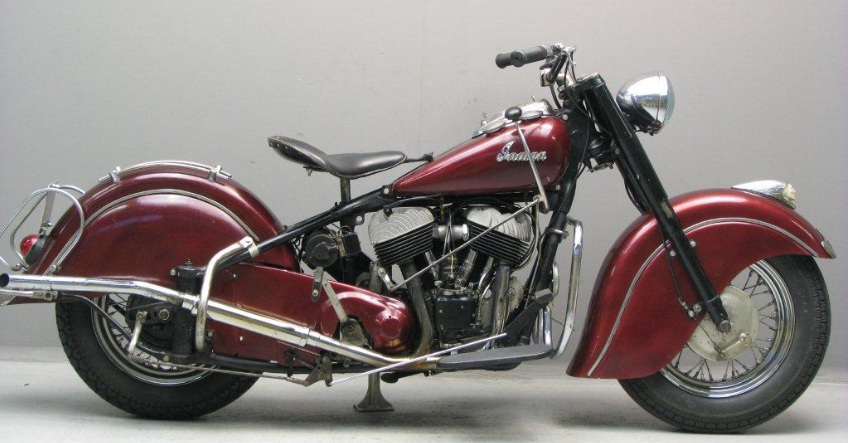
“Yes. It looked old and new at the same time, like. Like an old car that somebody’s fixed up. It had a maroon or burgundy tank and fenders, and it said ‘Indian’ on the side of the tank. Then I heard the gunfire, and ducked into the restaurant.”
Indian Motorcycle Company. Out of business twenty years ago. Collectors would pay any price for them.
“A wise decision. So, what’s your name?”
“Cindy McLaughlin. I run the flower shop down at the corner.”
“Is that where we can find you if we need anything?”
“Yes. I’m there every weekday, ten to seven. Here’s my card.”
She took one from her apron pocket and passed it over.
Blooming Beautiful. C. McLaughlin, owner.
“I thank you, Ms. McLaughlin. This should prove most helpful.”
“That’s Miss,” she said, giving me a coquettish look.
I gave her a nod and turned back to the car, looking at the napkin as I did.
ALA 40 – 8508.
“Alabama plates,” I said to Bodaway. “Won’t be easy. Let’s look over the scene, then go make some calls.”
“Right. And then we go rack this bastard up.”
The scene yielded nothing but a score of shell casings, .45 ACP, consistent with a MAC-10. We made sure they were preserved carefully for the crime lab, but we already knew that our perp used gloves to handle the rounds. We had close to fifty of these things, and not one print yet, so we headed back to the station to call the authorities in Alabama.
“This guy’s a wild animal,” Bodaway said as we headed back downtown. “I sure hope he resists.”
“What’s gotten into you, Indian? You weren’t always this hot-headed.”
“I get fed up with things, you know? You ever get fed up with stuff, Al? Loud commercials while you’re trying to enjoy a movie? Doing dishes? Now, there’s a conveyor belt to insanity. How about stopping for gas? That irritation right there ruins your whole commute.”
“Yeah, I get fed up sometimes. So what? Nothing you can do about it.”
“Nothing you can do about dishes, anyway,” Bodaway replied. “I get fed up with these ass wipes who think it’s their right to kill people and take the things they’ve worked for, and I’m in the best place possible to do something about it.”
“Oh, Indian! If you don’t calm down, you’re going to get yourself in trouble with Internal Affairs, and you don’t want that.”
“No? What if this guy has a little accident during the field interview? I.A. may jerk me around some, but that won’t help him when the dust settles.”
The Indian had always been an aggressive enforcer, preferring the flying tackle to the call for surrender, but this was off the reservation, if I can be allowed a pun. I could only assume that something was bothering him, and if he wouldn’t open up to his partner of three years, I didn’t know how to help him.
When we returned to the station I called the state police in Alabama and requested information on the license plate. A half hour later, I was on the phone with a Sergeant Casey Floyd of the Birmingham office. The bike was registered to one Joseph K. Rae, male Caucasian, age 26, who had a couple of prior convictions for assault and robbery. Not exactly a cold-blooded killer, but he was headed in that direction. The bike hadn’t been reported stolen, so we had to assume that Mr. Rae was still in possession. Sergeant Floyd said he’d fax us his mugshot.
A call to the local DMV disclosed that he hadn’t applied for a California Driver’s License, so we’d get no address or phone number there. We put out an APB on the bike and rider with the standard armed and dangerous flag, and decided to take a sweep through some of the low-rent neighborhoods. Even back then, San Diego had a population of one and three-quarter million. A needle in a haystack would have been child’s play.
As winter turned to spring, three more banks were hit, only one without a security guard not generating a murder. The wide media coverage of Rae’s picture and the description of his bike generated scores of tips, but none of them led anywhere, and everyone who worked in a local bank reported to work in a state of quiet terror during the month of April.
Meanwhile, the Indian became more volatile by the day. We had to catch a break soon.
We were well into May, that time of year that locals call “May gray,” before we caught our break. The robberies and their attendant murders had stopped a month before, and given that Mr. Rae had ridden a motorcycle across the country in winter, we had pretty much assumed that he had collected whatever sum he was working toward and moved on, probably to Mexico, twenty-some miles down the freeway. Not that we weren’t still interested.
We were driving through North Park on the way to Kensington to look at a dead homeless guy. Probably died of neglect and exposure, but we have to check, you know how it is. North Park is an old residential section north of the city with an odd makeup of residents. The houses there were mostly built around the turn of the century, some of them poorly constructed, all of them pre-code. The people who lived in them were either elderly, the original owners, or the twenty-something set, too well-off for the slums south of town, but unable to move up to one of the beach communities. As you might imagine, there’s quite a mix of residents there, and you never know what you’re going to find. But no one could have expected this.
We were on Madison Avenue, a far cry from its namesake street in New York, just blocks and blocks of those old houses. We were passing a quadruplex that I’ll never forget, two little houses in front with a common driveway between, two garages in back, each with a studio built on top, when Bodaway grabbed my arm and shouted, “Stop! Stop!”
Our unmarked screeched to a halt in the middle of the street as I looked around for a Kenworth hauling telephone poles, or maybe a live dinosaur. The Indian wasn’t known for such emotional outbursts, and it really unnerved me.
“What the hell?” I shouted at him.
“There’s an old bike at the back of that driveway with a maroon fender. We need to check it out. Pull over.”
“Are you sure?” I asked, maneuvering toward the curb.
“Did I sound sure?” he retorted, opening the door. “Cover me.”
“We better wait for backup,” I told him as he started toward the driveway.
“What are we going to tell them, that we found an old motorcycle? We need to confirm that it’s his.”
Before I could argue further, he walked into the driveway, one hand on the grip of his pistol. Staying by the left house, I drew my own gun and pointed it up the driveway. There were six windows, three on each side of the drive, and one in each studio above. If someone— if Rae decided to shoot either of us, it could come from anywhere. I felt a cold rivulet of sweat roll into my collar.
“Alabama plate,” Bodaway confirmed. “Now we can call for backup.”
He came back down the drive and we went to the car. As I called in our discovery, he took the shotgun, a riot model with an eighteen-inch barrel, from the trunk. I had just gotten an acknowledgement from dispatch when we heard the bike start up.
“Shit!” was the Indian’s sole comment as he sprinted back toward the driveway, shotgun at the high port. I followed him with my own pistol drawn, but being cautious, using the house for cover. All caution had left the Indian; he was Wyatt Earp at the OK Corral. Or maybe Doc Holiday. Yeah, Doc makes more sense, given the events that followed.
The Indian stepped into the middle of the driveway and raised the shotgun.
“Police!” he shouted. “Turn the bike off!”
Rae must have already had it in gear. He released the clutch handle and twisted the throttle, intent on running the Indian down. Bodaway got off two shots before the bike hit him. The first shattered Rae’s face shield, forcing him to twist the bike to the side, laying it down with the wheels leading its slide toward the street. The second mostly missed, a few of the pellets peppering Rae’s sleeve. Then the bike hit the Indian, the front wheel slamming into his ankles and knocking him ass-over teakettle as he flew down the driveway and crashed on the back of his head.
Rae was hurt, but not badly enough. He unzipped his jacket to expose his MAC-10 hanging on a lanyard around his neck. Somewhat dazed, he brought it up, trying to center it on me.
“Don’t do it!”
He tried in spite of the warning. I fired three shots to the center-mass as we had been trained, and he jerked back with the impact as the gun fell from his hand. I unsnapped it from the lanyard and took it with me as I went to check on Bodaway. Blood was spreading from the back of his head and he was completely unresponsive. If he had a pulse, I couldn’t find it. I could hear the sirens wailing in the distance as our backup approached on the quick, but it wasn’t quick enough. Nothing they could do would help either of these men.
“God damn it, Indian,” I said, more quietly than my feelings would suggest, “what the hell did you do that for?”
That was a quarter of a century ago; it’s still hard for me to believe that I made it to the twenty-first century. I’ve retired to a place in El Cajon, a quiet little community east of San Diego where it’s always hot and usually dry. Good for my lumbago, I’m told. My place is small but comfortable, and I have a group of friends that I share coffee with at Bonnie’s Cafe almost every morning. They’re good people, but none of them are quite like the Indian.
In three years, I came to love him like my own brother, maybe more. My brother died of complications following a bout of pneumonia. It was lengthy, and we had time to prepare. The Indian was yanked from my life in a moment of violence unparalleled in its savagery. I had three other partners after Honiahaka Bodaway, but we never had the same relationship, and there’s never been a day that I haven’t missed him.
In my thirty-year career on the force, I drew my gun eight times, and opened fire twice. Joseph K. Rae is the only man I ever killed, and I’ve never lost a minute’s sleep over it. He was a wild animal who preyed on the weak, killing anyone who stood in his way, and if a man ever deserved to die, it was him. I only wish I’d been quicker to fire.
The autopsy showed that the Indian’s pancreas was eaten up with cancer. He had maybe six months left, and most of that would have been spent in agony in a hospital bed. It wasn’t just that he was aggressive, nor even that he was reckless. Like Doc Holliday before him, he had a death wish, but unlike Doc, his was granted. I understand him, I’m happy for him, but I miss him all the same.
People don’t call each other Indians any more, or Wops, or Spades, or any of that. It isn’t PC, and I can understand people having the right to not be insulted over what they look like. But I don’t think he minded, and when we meet again in that great station house in the sky, I’ll call him Indian and hug him with tears in my eyes.
That’s just the way we were.
 Flights of Fancy